Choosing the right Automatic Punching And Creasing Machine can reshape an entire finishing workflow. It affects speed, accuracy, waste, labor, and customer satisfaction. A machine may look impressive in a showroom, yet perform differently beside a busy production line.
This guide examines ten leading models for packaging, commercial print, and short-run production. Each selection considers punching force, creasing precision, setup time, sheet compatibility, automation, maintenance, and operator safety. Real purchasing decisions also depend on board thickness, daily volume, die availability, and floor space. Small details matter. A smooth feeder can prevent hours of frustration.
Printing-industry educator Frank Romano has often expressed a practical truth: “Print is not dead; it is changing.” That idea applies directly to finishing equipment. Modern buyers need more than speed. They need flexible systems that handle changing orders without creating unnecessary waste. Automatic inspection, quick job changeovers, and reliable registration can make a measurable difference.
No ranking is perfect. A high-speed machine may be excessive for a small workshop. A compact model may struggle with demanding carton production. Service access can matter more than a headline specification. We compare these machines with that reality in mind, using practical performance indicators rather than marketing language alone.
The following list helps buyers identify suitable options, question supplier claims, and match equipment with real production needs. A careful decision today can prevent expensive adjustments later.
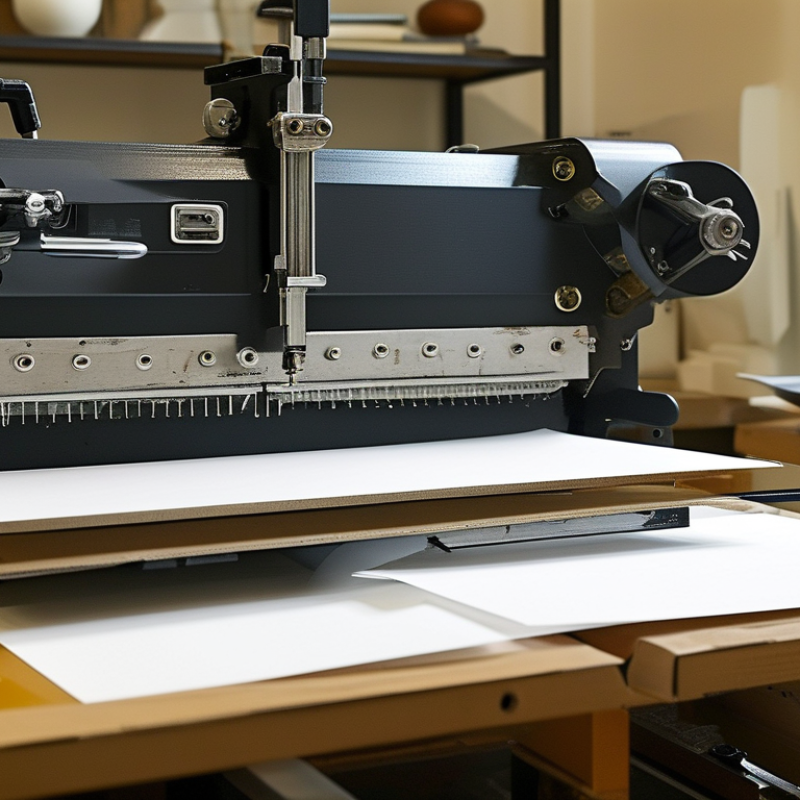
Automatic punching and creasing machines convert flat sheets into accurately cut and folded packaging parts. Feeding starts the process. A vacuum or friction feeder separates each sheet and guides it toward the working station. Optical sensors check its position, while side lays correct small shifts before punching. The machine then lowers a die with controlled force. Punching removes selected shapes, while creasing compresses fibers without cutting through them. This difference protects fold lines. It matters.
Inside the machine, a motor synchronizes feeding, die movement, and sheet delivery. Pressure settings must match the material’s thickness, coating, and fiber direction. Excessive pressure can crack printed surfaces or weaken narrow sections. Insufficient pressure may create incomplete cuts and uneven creases. Experienced operators inspect the first samples under strong light. They check clean edges, consistent dimensions, and folding performance. Digital controls improve repeatability, but they do not replace careful setup.
When comparing the top automatic punching and creasing machines to buy, buyers should examine feeder stability, die-change time, sensor accuracy, and maintenance access. Safety guards and emergency stops are essential for responsible operation. Production speed also needs honest evaluation. A faster cycle is not useful if waste increases. Material humidity can change results. A setup that works in the morning may need adjustment later. The process appears simple, but it is not completely forgiving. Even skilled teams can overlook slight registration errors during long runs. Regular cleaning, lubrication, and sample checks help maintain reliable output.
When comparing the top 10 automatic punching and creasing machines, speed should not dominate the decision. Measure productive output, not the screen’s maximum figure. A machine rated at 8,000 sheets per hour may produce less after setup, alignment, and waste. Smithers’ The Future of Folding Cartons to 2028 identifies automation and shorter production runs as major industry drivers. Therefore, check changeover time, sheet size, and actual output on your materials.
Registration accuracy deserves close attention. Ask suppliers to test fine creases, small waste margins, and mixed board thicknesses. A practical trial should record deviation across at least 100 sheets. Creasing pressure must remain stable near corners and folded edges. Inspectors should also examine cracking under bright light. Small defects matter.
PMMI’s 2024 packaging automation research highlights labor efficiency, uptime, and flexible production as important investment concerns. Compare automatic feeding stability, jam recovery, tool adjustment, and remote diagnostics. Energy use per 1,000 sheets is another useful figure. Safety guarding and emergency-stop access require equal scrutiny. ISO 12100 principles can guide the risk review, even when a machine appears simple. I would not trust a brochure’s “zero waste” claim without production records. Noise, dust, and operator fatigue are easy to overlook. They should be measured during a full shift.
Choosing an automatic punching and creasing machine starts with production needs, not the highest speed listed. On real shop floors, substrate thickness, sheet size, and job frequency matter more. A machine handling 6,000 sheets per hour may underperform if setup takes too long.
The 2024 PMMI Packaging Machinery Trends report highlights labor efficiency, flexible formats, and automation as major investment priorities. These findings support machines with fast makeready, automatic registration, and simple job recall. For short runs, prioritize tool-free adjustments and quick changeovers. For long runs, focus on feeder stability, pressure consistency, and waste control. Smithers’ packaging market research also identifies e-commerce and customized packaging as continuing growth areas. That suggests flexible tooling is valuable, even when current orders seem predictable. They may change quickly.
Do not overlook material testing. Thin folding board may need gentle feeding, while laminated sheets require stronger creasing pressure and accurate stripping. Ask suppliers for samples using your actual board, artwork, and production speed. Review hourly output after setup, not only the advertised maximum. A 2023 FEFCO industry report recorded European corrugated output above 50 billion square metres, showing the scale of demand for reliable converting processes. However, volume alone should not decide your purchase.
Tips: Compare total cost per finished sheet. Check feeder alignment, operator training, spare-part access, noise levels, and energy use. Request a written test report. Leave room for future formats.
| Rank | Machine Type | Recommended Production Level | Typical Sheet Format | Compatible Materials | Creasing and Punching Method | Typical Speed | Maximum Paper Thickness | Automation Features | Best-Suited Applications | Typical Investment Range (USD) |
|---|---|---|---|---|---|---|---|---|---|---|
| 1 | High-Speed Automatic Die-Cutting and Creasing Machine | High-volume commercial production | Up to approximately 1,060 × 760 mm | Paperboard, folding carton stock, corrugated board, laminated sheets | Flatbed die-cutting with inline creasing | 4,500–7,000 sheets/hour | Approximately 2–4 mm, depending on board grade | Automatic feeder, pile delivery, touchscreen controls, register adjustment, waste stripping options | Folding cartons, premium packaging, labels, display materials | $120,000–$300,000 |
| 2 | Automatic Flatbed Punching and Creasing Machine | Medium- to high-volume packaging production | Up to approximately 1,020 × 720 mm | Coated paper, card stock, paperboard, synthetic sheets | Flatbed punching with interchangeable cutting and creasing formes | 3,500–6,000 sheets/hour | Approximately 1.5–3 mm | Automatic feeding, pneumatic pressure control, programmable job settings, pile monitoring | Retail boxes, folders, cards, sleeves, promotional packaging | $80,000–$180,000 |
| 3 | Automatic Rotary Creasing and Perforating Machine | Continuous production with repeated crease patterns | Roll-fed materials from approximately 100–500 mm wide | Paper, lightweight card, thin synthetic film, flexible packaging stock | Rotary creasing, scoring, perforating, and slitting | 30–120 m/min | Generally up to approximately 0.8 mm | Servo-controlled web handling, digital length setting, automatic tension control, quick-change tooling | Envelopes, inserts, coupons, forms, continuous packaging components | $35,000–$120,000 |
| 4 | Automatic Sheet-Fed Creasing and Perforating Machine | Short- and medium-run commercial work | From approximately 320 × 450 mm to 750 × 1,050 mm | Digital print stock, coated paper, uncoated paper, light card | Programmable rotary creasing and perforating | 2,000–6,000 sheets/hour | Approximately 0.4–0.8 mm | Automatic sheet feeding, memory for job setups, multi-position creasing, jam detection | Brochures, menus, greeting cards, invitations, direct-mail products | $20,000–$75,000 |
| 5 | Automatic Carton Punching and Creasing Line | Large-scale folding-carton manufacturing | Up to approximately 1,400 × 1,000 mm | Solid bleached board, kraft board, coated cartonboard, laminated board | Integrated feeding, die-cutting, creasing, stripping, and delivery | 4,000–8,000 sheets/hour | Approximately 0.6–2 mm | Inline quality monitoring, automatic register correction, centralized lubrication, production data tracking | Food cartons, pharmaceutical cartons, cosmetic boxes, beverage packaging | $180,000–$500,000 |
| 6 | Automatic Corrugated Board Die-Cutting and Creasing Machine | Medium- and high-volume corrugated packaging | Up to approximately 2,500 × 1,300 mm | Single-wall and selected double-wall corrugated board | Flatbed punching, slotting, creasing, and optional printing integration | 2,000–6,000 sheets/hour | Approximately 3–8 mm | Automatic pile feeding, vacuum transport, servo positioning, waste removal, order memory | Shipping boxes, shelf-ready packaging, partitions, industrial cases | $150,000–$450,000 |
| 7 | Compact Automatic Punching and Creasing Machine | Small-batch and general commercial production | Up to approximately 520 × 720 mm | Paper, card stock, light paperboard, synthetic paper | Flatbed punching and creasing with manual or semi-automatic tooling setup | 1,500–3,500 sheets/hour | Approximately 0.6–1.5 mm | Automatic feeder, digital pressure adjustment, programmable stopping positions, compact footprint | Business cards, small boxes, folders, tags, invitations | $25,000–$70,000 |
| 8 | Automatic Multi-Function Paper Finishing Machine | Digital print shops and on-demand production | From approximately 320 × 450 mm to 750 × 1,050 mm | Digital toner stock, inkjet paper, laminated sheets, lightweight board | Creasing, perforating, cutting, slitting, and optional folding | Up to 2,000 sheets/hour | Approximately 0.5–0.6 mm | Barcode reading, automated setup, job memory, variable-data workflow support, operator safety sensors | Short-run packaging, photo products, menus, brochures, personalized mailers | $30,000–$100,000 |
| 9 | Automatic Foil-Stamping, Punching, and Creasing Machine | Premium packaging and specialty finishing | Up to approximately 750 × 1,060 mm | Paperboard, coated card, synthetic substrates, laminated packaging stock | Die-cutting and creasing with hot-foil stamping capability | 2,000–5,000 sheets/hour | Approximately 0.5–2 mm | Automatic foil feeding, temperature control, register adjustment, programmable pressure and dwell time | Luxury boxes, cosmetic packaging, certificates, premium labels, presentation folders | $100,000–$280,000 |
| 10 | Automatic Heavy-Duty Board Punching and Creasing Machine | Specialty and industrial packaging production | Up to approximately 1,600 × 1,200 mm | Thick paperboard, rigid board, honeycomb board, laminated board | High-pressure flatbed punching and deep creasing | 800–3,000 sheets/hour | Approximately 3–8 mm, subject to tooling and board structure | High-load drive system, automatic feeder, pressure presets, reinforced delivery unit, safety interlocks | Industrial cases, rigid boxes, protective packaging, large-format displays | $140,000–$400,000 |
The market for automatic punching and creasing machines is expanding with packaging demand. Smithers’ The Future of Global Packaging to 2028 projects the global packaging market will exceed 1.2 trillion US dollars by 2028. Folding cartons, labels, and corrugated packs are major growth areas.
The ten strongest buying profiles include flatbed die-cutters, rotary die-cutters, sheet-fed creasers, folder-creasers, digital cutting-and-creasing systems, short-run automatic punchers, corrugated-board rotary machines, multi-function carton lines, modular creasing lines, and high-speed packaging converters. A useful machine should offer stable registration, quick die changes, programmable pressure, and waste removal. Precision matters more than impressive speed. A faster machine can still produce costly rejects.
PMMI’s 2024 State of the Industry research identifies labor shortages and automation investment as continuing packaging concerns. For this reason, buyers should inspect feeder reliability, touchscreen controls, safety interlocks, and maintenance access.
A machine processing 7,000 sheets per hour may suit large carton plants. A compact digital system may serve prototypes and short runs better. The right choice depends on board thickness, sheet size, order frequency, and operator skill.
My practical concern is simple: specifications often look perfect on paper. Real performance can change with humidity, worn tooling, or inconsistent stock. Requesting sample trials and measured waste data remains essential.
Automatic punching and creasing machines need careful installation before production begins. Place the machine on a level, stable floor with enough space for material loading and cleaning. Check electrical grounding, air pressure, safety guards, and emergency stops. A qualified technician should verify alignment and calibrate the punching and creasing tools. Small installation errors can cause uneven creases, paper movement, or damaged sheets.
During operation, begin with a slow test run using sample material. Confirm feeding accuracy, crease depth, punching position, and waste removal. Operators should keep hands away from moving parts and follow the machine’s operating instructions. A perfect first setup is uncommon. Material thickness, humidity, and tool wear may require adjustments. Record successful settings for repeat orders, but do not treat old settings as permanent.
Tips: Clean dust from sensors and feeding rollers each shift. Lubricate approved points according to the maintenance schedule. Inspect blades, creasing rules, belts, and fasteners weekly. Stop the machine before clearing jams or replacing tools. Keep a maintenance log with dates, faults, adjustments, and replaced parts. This record helps technicians identify recurring problems before they become expensive failures. Audits may reveal skipped checks, so leave room for improvement.
It cuts selected shapes and presses fold lines into flat sheets. Creasing compresses fibers without cutting through them. This protects folding areas.
A vacuum or friction feeder separates each sheet. Sensors check its position. Side lays correct small shifts before punching begins.
Pressure must match material thickness, coating, and fiber direction. Excessive force may crack printed surfaces. Low pressure can cause incomplete cuts.
They should examine the first samples under strong light. Check clean edges, accurate dimensions, and smooth folding. Small errors can remain unnoticed.
No. Digital controls improve repeatability, but careful setup remains necessary. I would not trust the screen alone.
A compact digital cutting-and-creasing system may work well. It avoids some tooling delays. Its output still depends on accurate setup.
Compare feeder stability, sensor accuracy, die-change time, and maintenance access. Also review pressure control, waste removal, and safety interlocks.
Not always. Higher speed is useless if waste increases. A slower machine may produce better results with difficult board stock.
Humidity can change sheet behavior and folding results. A setup working in the morning may need adjustment later. Materials are not perfectly consistent.
Regular cleaning, lubrication, and sample checks support stable production. Inspect tooling and registration during long runs. Small neglect becomes expensive.
This guide explains how an Automatic Punching And Creasing Machine combines feeding, positioning, punching, and creasing processes to improve efficiency and consistency in packaging and printed-material production. It outlines the key features buyers should compare, including operating speed, feeding accuracy, crease quality, format flexibility, automation level, material compatibility, adjustment convenience, safety systems, and energy performance. These factors help users evaluate overall machine reliability rather than focusing on speed alone.
The article also presents the top 10 Automatic Punching And Creasing Machine options to consider for different production needs, from compact equipment for smaller workshops to high-capacity systems for continuous industrial workloads. It offers practical guidance for matching machine capacity, working size, and automation functions with expected output and material types. Finally, it highlights essential installation, operation, and maintenance practices, such as proper setup, operator training, routine cleaning, inspection of wear parts, and timely servicing to support stable performance and extend equipment life.

Wentong Machinery