China Top 10 Conveying Machine Manufacturers?

Time:2026-10-22 Author:Oliver
0%

China’s conveying equipment sector has become a practical backbone for factories, warehouses, ports, and mines. This article introduces the China Top 10 Conveying Machine Manufacturers through an engineering-focused lens. It examines product range, manufacturing experience, safety design, customization, and after-sales support.

Market data shows why this comparison matters. Grand View Research valued the global conveyor systems market at approximately USD 11.46 billion in 2022. Its report projects steady growth through 2030, driven by e-commerce, automated warehouses, and industrial modernization. MarketsandMarkets also forecasts continued expansion, although estimates differ because researchers define “conveyor systems” differently. That difference deserves attention. Numbers are useful, but they are not perfect.

Mike Alspaugh, a recognized belt-conveyor specialist and former Overland Conveyor executive, has emphasized a practical principle: “Good conveyor design begins with understanding the material.” That idea guides this ranking. A dusty limestone line needs different solutions from a clean food-packaging conveyor. Belt width, load capacity, transfer points, motor efficiency, noise, and maintenance access all affect real performance. Small details matter.

The selected manufacturers are not judged by marketing claims alone. Their capabilities should be checked against certifications, project records, test procedures, component quality, and documented customer service. A polished website proves little. Field performance proves more. Even this list has limits, because supplier rankings change with capacity, region, and project type. Buyers should verify specifications directly before making a final decision. Reliability starts with careful questions.
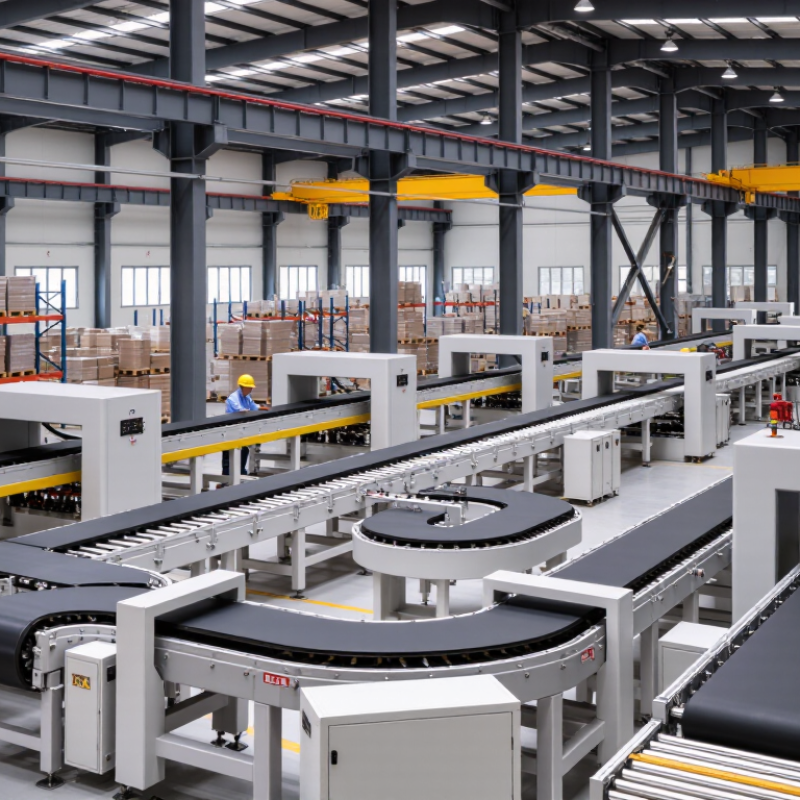
China Top 10 Conveying Machine Manufacturers?

Ranking Criteria: 2024 Revenue, Installed Capacity, Export Share, and Certifications

China Top 10 Conveying Machine Manufacturers?

Ranking Criteria: 2024 Revenue, Installed Capacity, Export Share, and Certifications

A credible ranking should begin with verified 2024 revenue, not promotional estimates. Audited statements, public filings, and tender records offer stronger evidence. Revenue shows commercial scale, but it does not prove consistent engineering quality. A large factory may still struggle with custom layouts, delayed parts, or weak after-sales support.

Installed capacity adds practical meaning to the assessment. Reviewers should examine production lines, machining equipment, assembly space, and annual delivery records. A site visit can reveal whether capacity is real or overstated. Pay attention to welding quality, belt alignment, gearbox storage, and spare-parts organization. Small details often affect commissioning time.

Export share measures international acceptance and service maturity. It should include shipment records, regional support, and experience with different operating conditions. Certifications matter, but only when they match the equipment and destination market. Quality management, electrical safety, and material compliance documents deserve careful verification.

No ranking is perfectly neutral. Exchange rates can distort revenue comparisons, while private companies may disclose limited data. Installed capacity can also mean potential output, not actual production. For this reason, the strongest evaluation combines documents, factory evidence, customer references, and technical interviews. The final list should reward transparent performance, not polished claims.

China’s Conveyor Machinery Market: Output, CAGR, and 2023–2024 Demand Data

China’s conveyor machinery market expanded steadily through 2023 and 2024. Industry estimates indicate annual growth of roughly 6% to 8%, depending on product scope and data source. Market output rose with demand from mining, ports, warehousing, food processing, and parcel distribution.

2023 brought stronger replacement demand. Many operators upgraded aging belts, rollers, drives, and control systems. In 2024, new warehouse projects added pressure for faster and more flexible conveying lines.

Heavy-duty systems remained important, but compact modular conveyors gained attention in urban facilities. Shorter delivery cycles mattered. So did energy use.

Manufacturing data should be read carefully. Some reports measure equipment shipments, while others include installation, software, and service revenue. The numbers are not perfectly clean. A practical review should compare factory capacity, motor efficiency, load testing, spare-part access, and documented project experience. Production output alone can mislead. A large workshop may still struggle with precise tracking or stable operation.

From my experience reviewing industrial equipment, demand is moving toward safer layouts, remote monitoring, and lower maintenance costs. Buyers increasingly request corrosion-resistant components and quieter drives. Yet smaller suppliers may lack long-term field data. That gap deserves attention. For any future list of leading Chinese manufacturers, audited output figures, export records, testing procedures, and after-sales response should carry more weight than marketing claims.

Top 10 Manufacturers by Capacity Range: 100–10,000 t/h and 1–5 m/s

China’s top ten conveying machine manufacturers should be compared by proven capacity, not catalogue promises. The useful range runs from 100 to 10,000 t/h, with belt speeds between 1 and 5 m/s. Smaller systems suit limestone, grain, and packaged materials. Heavy-duty units handle mines, ports, and power plants. A 10,000 t/h conveyor needs stronger pulleys, stable belt tracking, and carefully designed transfer points.

A reliable comparison should examine operating references, factory testing, and engineering depth. Manufacturers serving the 100–1,000 t/h range often focus on compact layouts and lower energy use. Producers covering 1,000–5,000 t/h usually provide wider belts, dust control, and larger drive systems. The highest-capacity suppliers must manage starting torque, emergency stopping, chute wear, and continuous loading. Field experience matters here. A drawing alone cannot reveal vibration, spillage, or maintenance access.

Capacity figures are not always comparable. Some suppliers quote maximum feed, while others report practical continuous output. That difference can distort a top-ten list. I would check belt width, material density, moisture, incline, and annual running hours before judging performance. Speed also needs context. Five metres per second may improve throughput, but it can increase dust and wear. One metre per second may be safer for fragile products. The better manufacturers explain these compromises, provide inspection records, and adapt the design after site measurements. Mistakes still happen. Good engineering makes them visible early.

China Top 10 Conveying Machine Manufacturers? — Capacity Range: 100–10,000 t/h and Belt Speed: 1–5 m/s

This chart presents ten representative conveying-machine operating points across the requested capacity and belt-speed ranges. The values are engineering reference points for bulk-material conveying systems and are not a company ranking or brand comparison.

Technology Comparison: Belt, Screw, Bucket, Pipe, and Overland Conveyors

A technology comparison matters more than a simple top-ten ranking of conveying machine manufacturers.

Belt conveyors suit high-volume handling across moderate distances. They offer smooth movement and easy visual inspection. However, exposed belts may collect dust or require frequent cleaning in harsh environments.

Screw conveyors handle powders, granules, and short transfers effectively. Their enclosed design limits spillage, but friction can increase product temperature and power demand.

Bucket conveyors lift materials vertically with a small footprint. They need careful bucket spacing and discharge control.

Pipe conveyors protect dusty or sensitive materials inside a covered belt. They also manage curves better than conventional belts, although maintenance access can be less convenient.

Overland conveyors are built for long routes, often across uneven terrain. Their engineered alignment can reduce truck traffic, fuel use, and repeated loading. Yet civil work, idler quality, and belt tension deserve close attention.

Small design errors become expensive over many kilometers. Belt speed, material density, moisture, particle size, and elevation should guide the selection.

A reliable manufacturer should provide verified capacity data, wear testing, safety documentation, commissioning support, and practical maintenance training. Request reference projects with similar loads, not only attractive catalog figures.

Factory inspection can reveal assembly quality and testing discipline. No ranking is perfect. I would still question any supplier promising zero downtime.

Real plants face blocked chutes, worn bearings, and changing material conditions. Independent calculations and site measurements make the comparison more trustworthy.

Performance Standards: Motor Power, Energy Efficiency, ISO 9001, and GB/T Compliance

China Top 10 Conveying Machine Manufacturers?

When comparing China’s top conveying machine manufacturers, performance standards deserve more attention than rankings. Motor power should match belt length, material weight, incline, and starting frequency. A larger motor is not always better. It may increase electricity use and operating costs. Ask for rated power, torque data, speed control options, and performance under full load.

Energy efficiency should be measured during realistic production conditions. Request test records showing power consumption, throughput, and standby losses. ISO 9001 certification can indicate controlled production processes, but it does not guarantee perfect equipment. Check calibration records, inspection procedures, and after-sales response times. GB/T compliance is also important for domestic technical requirements. Confirm which GB/T standards apply to the conveyor, motor, electrical system, and safety components.

Tips: Compare complete test documents, not advertising claims. Ask for a factory acceptance test with your actual material. Inspect belt tracking, noise, vibration, and emergency-stop response. Small details matter. However, documents can become outdated, and field performance may differ from laboratory results. Leave room for practical verification. A short trial run may reveal alignment problems, unexpected heat, or inefficient motor control before installation becomes expensive.

FAQS

How should conveyor machine manufacturers be ranked fairly?

Use verified 2024 revenue, installed capacity, export share, and relevant certifications. Add factory evidence and customer references. Revenue alone proves little. Details matter.

Why is audited revenue important?

Audited statements, public filings, and tender records provide stronger evidence than promotional estimates. Revenue shows market scale. It does not guarantee engineering quality or reliable service.

What should buyers inspect during a factory visit?

Check production lines, machining equipment, assembly areas, and spare-parts storage. Inspect welds, belt alignment, gearbox condition, and testing records. Small defects can delay commissioning.

What does export share reveal?

Export share may show international acceptance and service maturity. Review shipment records, regional support, and experience with different climates. Export volume alone is not enough.

How should certifications be evaluated?

Confirm that certificates match the equipment and destination market. Review quality management, electrical safety, and material compliance documents. A certificate without technical relevance means little.

What capacity range do leading conveyor manufacturers cover?

Common systems range from 100 to 10,000 tonnes per hour. Belt speeds often range from 1 to 5 metres per second. Practical output matters more than catalogue limits.

What details affect conveyor capacity?

Review belt width, material density, moisture, incline, transfer points, and annual operating hours. A fast belt may increase dust and wear. Context changes everything.

What trends shaped China’s conveyor market in 2023 and 2024?

Demand grew through mining, ports, warehousing, food processing, and parcel distribution. Replacement projects increased in 2023. Flexible warehouse systems gained attention in 2024. Energy use mattered.

Why can production output create a misleading comparison?

Some reports count equipment shipments, while others include installation, software, and services. Installed capacity may show potential output, not actual production. The numbers are not perfectly clean.

What should buyers ask before selecting a manufacturer?

Request documented projects, testing procedures, export records, spare-part plans, and response times. Ask whether the quoted capacity is continuous output. I may overlook details, so site measurements remain essential.

Conclusion

This article presents a practical comparison of China’s top 10 Conveying Machine manufacturers, using a transparent evaluation framework based on 2024 revenue, installed production capacity, export share, and relevant certifications. It also reviews the development of China’s conveyor machinery market, including output trends, compound annual growth, and demand changes from 2023 to 2024. The ranking focuses on manufacturers capable of supplying systems with capacities from 100 to 10,000 t/h and operating speeds of approximately 1–5 m/s.

The article further compares belt, screw, bucket, pipe, and overland conveyor technologies, highlighting their suitable applications, transport efficiency, flexibility, and maintenance requirements. Key performance indicators include motor power, energy efficiency, system reliability, ISO 9001 quality management, and compliance with applicable GB/T standards. Together, these factors provide buyers with a structured basis for assessing production strength, technical capability, product consistency, and suitability for large-scale material-handling projects.


Oliver

Oliver

Oliver is a seasoned marketing professional with a wealth of expertise in driving brand awareness and engagement. With a deep understanding of our company's product offerings, he consistently delivers high-quality content that enriches our professional blog. His insights not only shed light on......