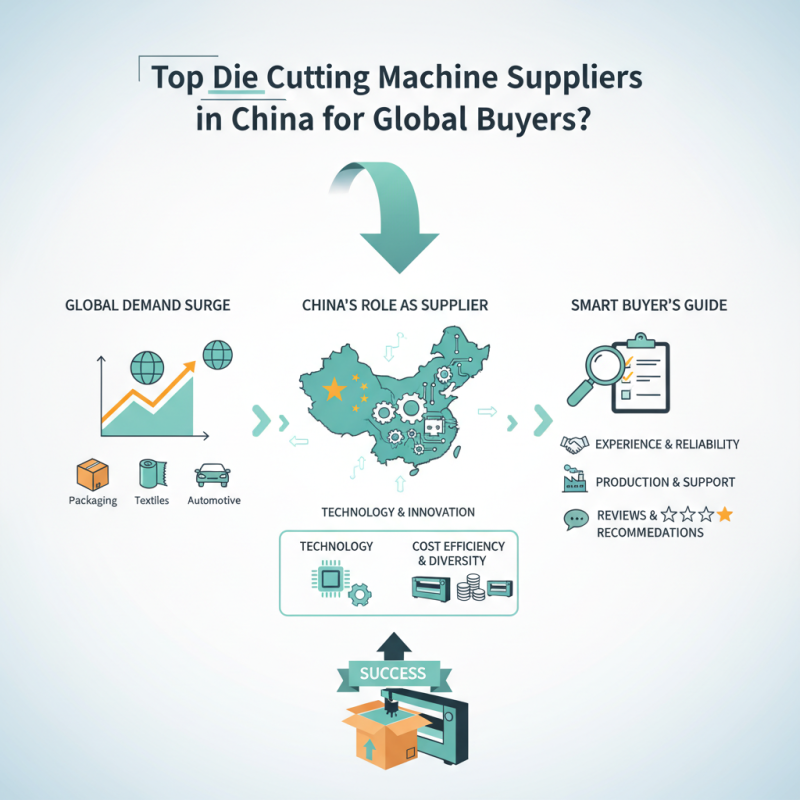
The demand for Die Cutting Machines has surged globally. Businesses are seeking cutting-edge solutions for various applications. China stands out as a leading supplier in this sector.
Chinese manufacturers offer diverse Die Cutting Machines, catering to different industries. This includes packaging, textiles, and automotive sectors. Their expertise in technology has led to innovations that improve efficiency and reduce costs. The competitive landscape is vast, but not all suppliers meet international quality standards. Buyers must navigate this crowded market carefully.
When selecting a supplier, consider experience and reliability. Reading reviews and seeking recommendations can be helpful. It's essential to evaluate production capabilities and after-sales support. A well-chosen supplier can significantly impact your business's success. The right Die Cutting Machine can enhance productivity and product quality, making it crucial to invest time in research.
Die cutting machines play a vital role in various industries. These machines can slice through materials like paper, cardboard, and even fabric. Their versatility allows them to create intricate designs and shapes. In packaging, die-cutting shapes boxes with precision. In textiles, they cut patterns for garments efficiently.
When selecting a die cutting machine, consider your specific needs. Think about the materials you'll use. Evaluate the production volume you expect. A high volume may require a more robust machine. For smaller operations, a manual or semi-automatic option could suffice. Remember, investing in quality machinery can enhance accuracy and reduce waste.
Tips: Always test the machine with different materials. This will help you understand its capabilities better. Pay attention to maintenance requirements to ensure longevity. Regular checks can prevent costly breakdowns. Understanding these factors is crucial for making informed decisions.
When selecting a die cutting machine, key features play a critical role in performance and efficiency. One important factor is precision. Inaccurate cuts can lead to material waste. According to industry reports, precision errors can reach up to 15%, impacting overall production. A machine that guarantees high accuracy can significantly reduce costs over time.
Another critical consideration is the speed of operation. A reliable die cutting machine should maintain a balance between speed and quality. Machines that can operate at high speeds may sacrifice precision. Reports show that a speed improvement of just 20% can boost productivity but requires careful assessment of accuracy rates. Buyers must understand their production needs and consider machines that offer a customizable approach to both speed and quality.
Lastly, durability and maintenance are essential. A machine that frequently breaks down can disrupt production. Maintenance costs can accumulate quickly, affecting profit margins. Industry data suggests that machines with robust build quality can last 10 to 15 years, reducing the total cost of ownership. Investing in machines that hold up under pressure is crucial for long-term success. Ensure to evaluate warranty and support options when assessing potential suppliers.
This bar chart compares the machine efficiency (in units per hour) of top die cutting machine suppliers. Each supplier demonstrates varying levels of output efficiency, allowing buyers to consider which supplier may best meet their production needs.
The die cutting machine industry in China has seen significant growth. A recent report highlighted that the sector is expected to reach USD 2 billion by 2025. This surge is driven by rising demand in packaging, automotive, and textiles industries. China leads in manufacturing precision die cutting machines. Companies are increasingly focusing on automation and energy efficiency.
Several suppliers stand out for their innovative designs and advanced technology. They are incorporating user-friendly interfaces and enhanced safety features. However, some firms struggle with quality control and inconsistent delivery. This inconsistency can create challenges for global buyers. Yet, many suppliers are addressing these issues to improve reliability.
Green technologies are also emerging in die cutting production. Reports indicate that eco-friendly machines can reduce energy consumption by up to 30%. Suppliers should invest in sustainable practices to meet global standards. This shift could enhance their competitive edge in the international market.
When evaluating die cutting machine suppliers in China, price and quality play crucial roles. Buyers often look for competitive pricing, but the lowest cost may come with compromises. Quality must also be assessed through various parameters like durability, precision, and performance.
In the market, a wide range of suppliers offers machines loaded with advanced features. Some focus on high-volume production, while others cater to niche needs. However, it's essential to recognize that not every supplier delivers consistently high-quality products. Some machines may excel in functionality but fall short in customer support or warranties. A thorough comparison should involve user reviews and field tests, to gather insights on long-term performance.
Buyers may find great deals, but the best choice often requires more scrutiny. It is wise to prioritize manufacturers that provide detailed specifications and transparent pricing structures. While some suppliers may sound appealing, their reputations could hold the key to avoiding pitfalls. Balancing price with the assurance of quality remains a challenge for many global buyers.
| Supplier Type | Average Price (USD) | Quality Rating (1-5) | Lead Time (Days) | Minimum Order Quantity |
|---|---|---|---|---|
| Manufacturer A | $500 | 4.5 | 15 | 10 |
| Manufacturer B | $700 | 4.7 | 20 | 15 |
| Manufacturer C | $650 | 4.2 | 25 | 12 |
| Manufacturer D | $800 | 4.8 | 30 | 20 |
| Manufacturer E | $550 | 4.6 | 18 | 8 |
The die cutting industry is evolving rapidly. Emerging technologies are reshaping production processes. Precision and efficiency are becoming vital. Many manufacturers are adopting smart technologies, enhancing accuracy and reducing waste.
Automation is a key trend. It streamlines operations and cuts down labor costs.
Sustainability is another significant factor. Clients are increasingly favoring eco-friendly materials. This shift drives innovation in die cutting machines. Suppliers are exploring biodegradable options. These materials resonate with environmentally conscious consumers. However, balancing cost and sustainability remains a challenge.
Market growth continues to attract global buyers. Many suppliers are responding to increasing demand by broadening their product offerings. The competition is intensifying, pushing companies toward innovation. The future promises advanced technological integration. Adapting to these changes will define a supplier's success. The road ahead is full of opportunities and challenges.
: Die cutting machines can cut through materials like paper, cardboard, and fabric.
Consider your specific needs, materials, and expected production volume when selecting a machine.
Inaccurate cuts can lead to material waste. Precision errors can impact production significantly.
Speed is important, but machines must balance speed and quality to avoid sacrificing precision.
Ignoring maintenance can lead to costly breakdowns and disrupt production significantly.
A quality machine can last 10 to 15 years with proper maintenance and support.
Automation streamlines operations and helps reduce labor costs in die cutting processes.
Clients prefer eco-friendly materials, pushing suppliers to innovate and offer biodegradable options.
Yes, increasing demand is attracting global buyers and driving suppliers to broaden product offerings.
Assess warranty, support options, and the ability to adapt to technological advancements.
The article "Top Die Cutting Machine Suppliers in China for Global Buyers" provides a comprehensive overview of die cutting machines and their varied applications in industries ranging from packaging to manufacturing. It highlights key features to consider when selecting a die cutting machine, including precision, speed, and adaptability. Additionally, the article presents a comparative analysis of price and quality among leading suppliers in China, offering valuable insights for global buyers looking to make informed purchasing decisions.
Looking ahead, the article discusses future trends in die cutting technology, such as advancements in automation and digital integration, which are expected to drive market growth. As the demand for efficient and versatile die cutting machines continues to rise, understanding these trends will be crucial for businesses aiming to stay competitive in a rapidly evolving landscape.

Wentong Machinery