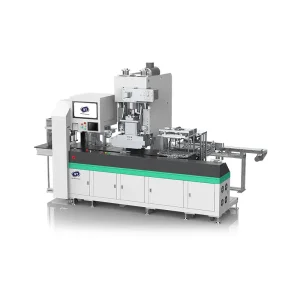
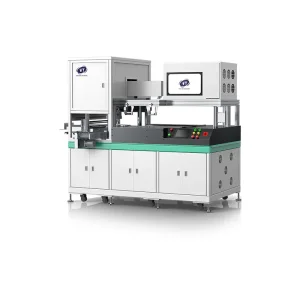
Engineered for unmatched throughput, tight mechanical tolerances, and reliable application execution.
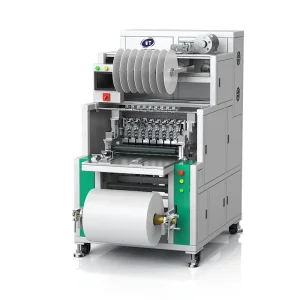
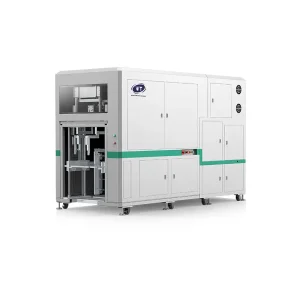
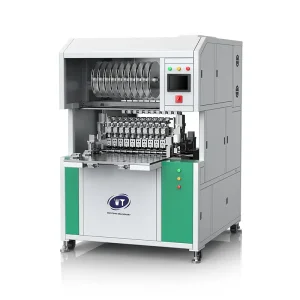
A Professional Whitepaper and Market Outlook for 2024–2030
Executive Summary: As Saudi Arabia accelerates its ambitious Vision 2030 program, digital integration, financial infrastructure enhancement, and local manufacturing capabilities have reached an unprecedented inflection point. The local demand for highly secure, exceptionally durable smart cards—including national identification cards, mada-compliant bank cards, transit solutions, and smart access tokens for massive mega-projects like NEOM and the Red Sea Project—is skyrocketing. Consequently, high-performance magnetic stripe laying equipment has transitioned from a utility to a vital pillar of the localized industrial supply chain.
Under the patronage of the Saudi Government's National Industrial Development and Logistics Program (NIDLP), local production of technical commodities is receiving substantial support. Smart cards, which serve as secure physical tokens of identity and financial transactions, are key to this modernization. The Saudi Central Bank (SAMA) mandate for the localized transaction network, mada, has set stringent physical and structural criteria for debit and credit cards, making robust production lines an operational necessity.
Moreover, the Kingdom is developing cognitive and automated cities. Projects such as NEOM, Qiddiya, and Diriyah Gate require tens of millions of secure multi-application credentials, local hospitality access keys, and high-frequency RFID transponders. Implementing state-of-the-art magnetic stripe laying machinery allows regional manufacturers to coat plastic or paper sheets with high-coercivity (HiCo) or low-coercivity (LoCo) magnetic films at high speed, ensuring full compatibility with electronic payment terminals, access control readers, and public transit gates throughout the Gulf Cooperation Council (GCC) area.
While the international market continues to migrate towards pure contact-free chip and NFC technologies, the magnetic stripe remains an indispensable structural asset on a global scale. In financial services, the EMV (Europay, Mastercard, and Visa) standard continues to prescribe dual-mode capabilities—meaning credit cards must house both active microchips and back-up magnetic stripes to ensure global interoperability, especially in jurisdictions where legacy infrastructures still persist.
Furthermore, magnetic stripes are observing rapid application expansions in alternative industrial niches:
For GCC enterprises seeking to establish local card factories, navigating the procurement of core equipment is highly critical. Located in Guangming District, Shenzhen, China, Wentong Machinery Co., Ltd. serves as a reliable international manufacturing partner, blending industrial engineering experience with a highly efficient manufacturing hub. Operating a modern 5,000-square-meter facility structured under 5S standards, Wentong has integrated design, engineering, R&D, assembly, and testing phases to achieve strict operational control.
Chinese mechanical engineering is renowned for rapid R&D cycles, customized layout configurations, and component supply chains. Shenzhen's unique location enables us to source premium materials and electrical components (e.g., Japanese Omron PLCs, SMC Pneumatics, Siemens HMIs) quickly, assembling world-class machinery at moderate pricing. Furthermore, we maintain a dedicated pre-sales consulting practice and robust video-assisted diagnostics to assist operators across the Middle East in keeping their production systems active 24/7/365.
Established in 2008, Wentong has over 20 years of experience in developing and manufacturing smart card machines and post-press equipment. We have been committed to constantly growing and improving our products and service to meet all our customer’s requirements for the production of children’s books, board books, paper cards, and plastic cards.
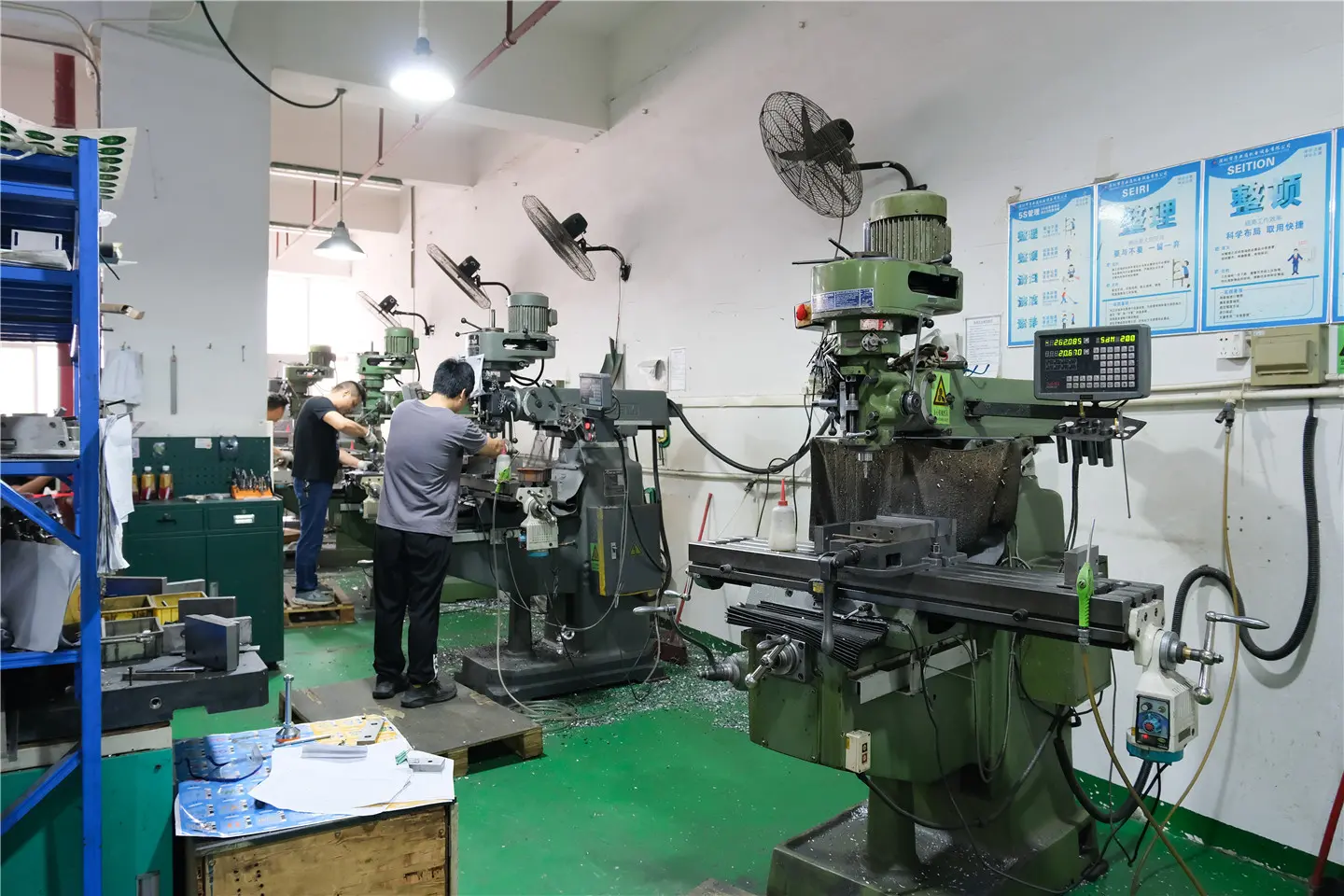
Our factory, situated in Shenzhen, China, covers 5,000 square meters and houses structured processing, assembly, and product display areas. Strict implementation of 5S standards creates a safe, comfortable, and efficient manufacturing space for our highly skilled technicians and electrical engineers.

Tailored manufacturing workflows to meet the stringent technical guidelines of Middle Eastern industrial operations
Providing precision roll-to-roll magnetic laying machinery for high-volume paper-based magnetic tickets used in Riyadh's expanding municipal train network and automated metro networks, achieving optimal readability under diverse ambient temperatures.
Applying ultra-precise HiCo (High Coercivity) magnetic foils onto multi-layered PVC card body sheets. The specialized heat and tension control profiles prevent micro-warps, satisfying all mada and international EMV magnetic layout criteria.
Manufacturing wood-base and recycled plastic-base magnetic access cards for keyless hotel environments in Red Sea and NEOM gigaprojects, leveraging Wentong's flexible magnetic laying modules to process alternative eco-substrates.
Wentong Machinery guarantees pre-sales validation, systematic quality controls, and active local deployment support
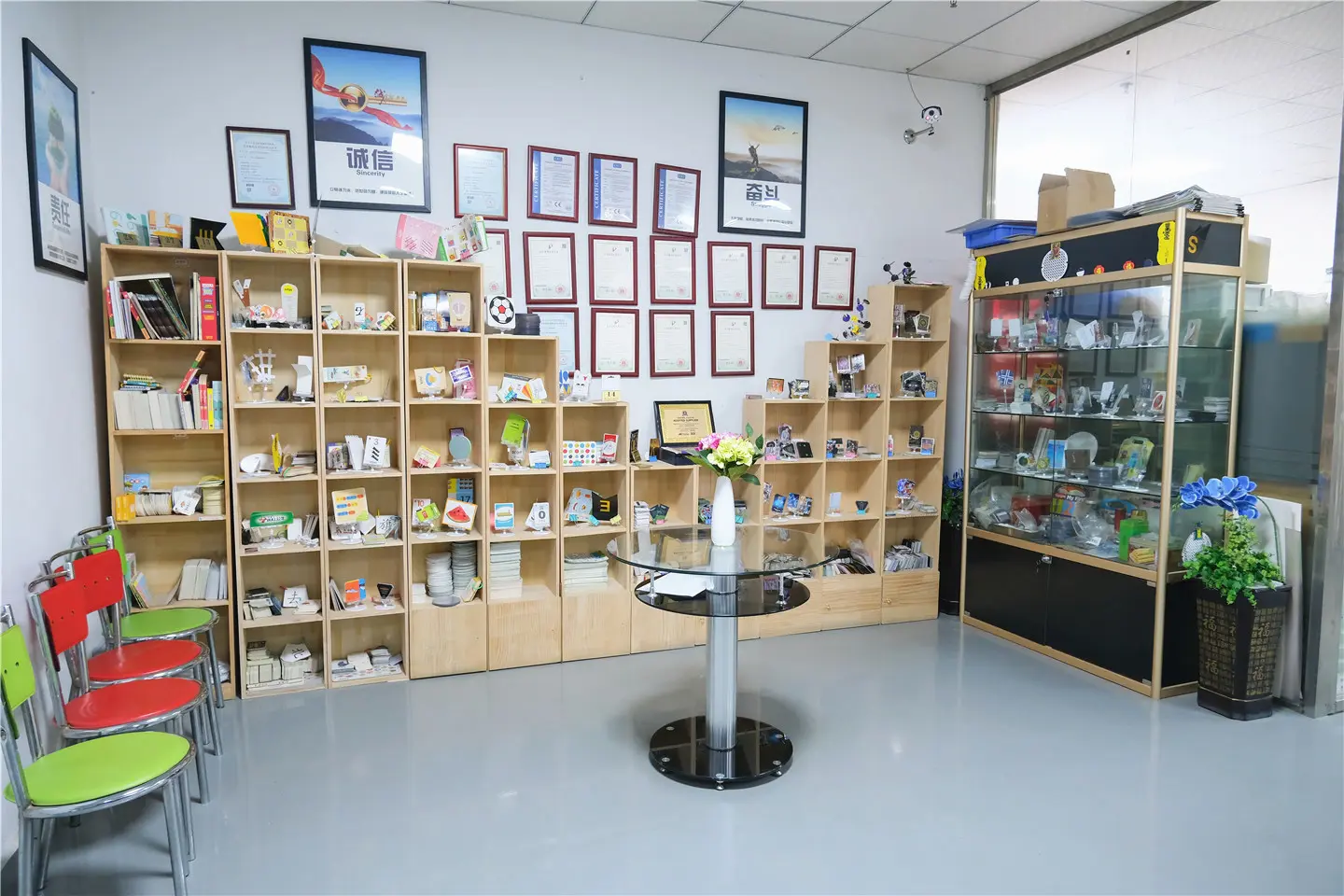
We understand that every industrial card factory maintains custom space limitations and unique production throughput goals. Wentong delivers highly detailed pre-sales advisory support:
Ordering custom-built equipment requires deep transparency and verified check-points:
Inside our advanced production workshop, assembly areas, and quality testing centers in Shenzhen, China


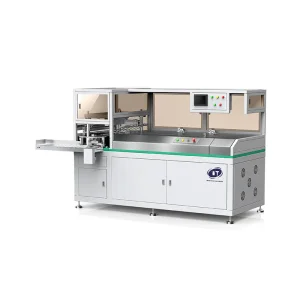
Explore our industrial range of high-durability die cutting, sorting, and automated sealing packaging solutions
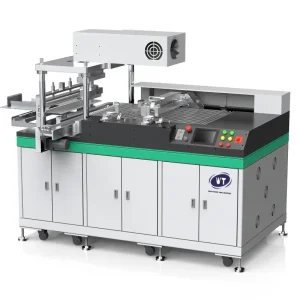
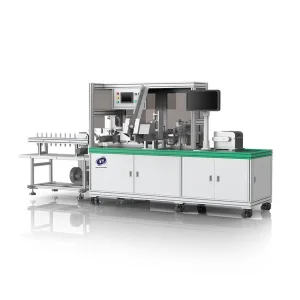
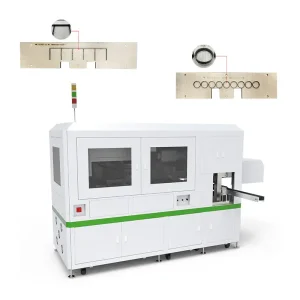
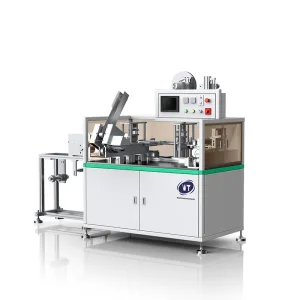
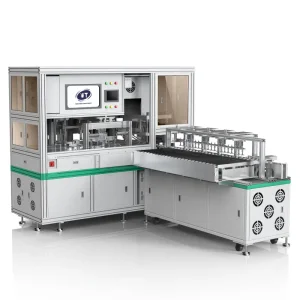
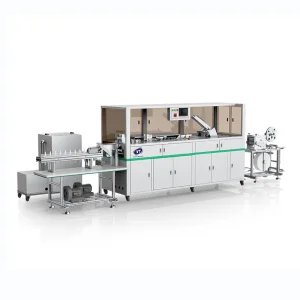
Key technical insights to guide your procurement, calibration, and smart card line expansion goals.
Sheet-fed magnetic tape laying machines process pre-cut plastic or paper panels. In contrast, roll-to-roll (R2R) tape laying machines process substrates from a continuous roll. R2R systems achieve higher throughput speeds and material efficiency, making them ideal for high-volume applications like transit tickets or massive production runs. Sheet-fed machinery offers greater flexibility for small-batch adjustments and mixed card architectures (e.g., custom local banking or security access cards).
Wentong Machinery integrates multi-stage digital temperature regulators paired with custom heating rollers. Each individual thermal zone is managed by PLC systems with feedback loops. This design maintains heat tolerances within ±1°C, preventing thermal deformation of the PVC sheet, protecting magnetic integrity, and ensuring a uniform bond across all parallel tracks.
Yes, our magnetic laying systems are fully compatible with both HiCo and LoCo magnetic tapes. Operators can adjust tension profiles, application temperatures, and pressure values via the HMI control screen to switch between magnetic tape variants.
Thanks to high-performance servo motor drives and precise ball-screw layouts, our systems maintain a positional laying tolerance of within ±0.1 mm. This meets ISO/IEC 7811 international standards, which specify the exact placement of the magnetic tracks relative to the card's outer margins.
We provide structured video walk-throughs, pre-shipment wiring diagrams, and detailed manuals. In addition, our electrical designs allow for remote PLC diagnostic interfaces via secure internet links, enabling our Shenzhen headquarters to diagnose sensor levels and adjust programs directly for quick issue resolution.
Wentong laying machines handle materials ranging in thickness from 0.15 mm to 0.84 mm. Custom feeders and tension controllers can be configured for thin paper ticket stocks as well as thick, heavy-duty polycarbonate or hybrid smart card structures.
Our standard sheet layouts allow for laying 3 to 8 magnetic tracks in parallel on a single plastic sheet in one pass. The quantity is determined by sheet dimensions and track configurations. Laying heads can be individually adjusted or deactivated via the operator panel.
Every machine is run under continuous stress testing for 48 hours using sample materials. We verify the positional stability of the servo motors, test the thermal variations on the roller face with infrared sensors, confirm the peeling clean limit of the waste tape, and run complete test batches to ensure product quality.
 Wentong Machinery